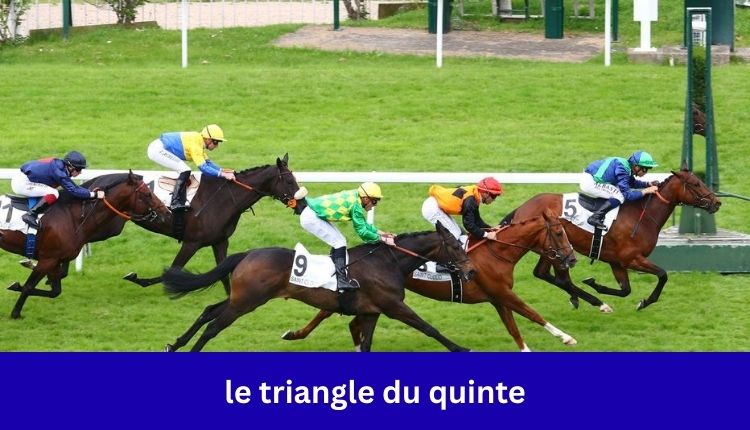
Although this phrase sounds abstract, its main idea is based on balance, proportional relationships and structured interaction between the three basic elements. In this article, le triangle du quinte is explored in depth, focusing on its origins, theoretical significance, practical applications, and long-term relevance. The discussion is written in narrative form, using subheadings for clarity and without bulleted structures under those subheadings, in accordance with your preferences.
Historical background: le triangle du quinte
The historical roots of le triangle du quinte can be traced to European analytic traditions, where geometry and philosophy often intersected. The term itself combines the idea of the triangle, a universal symbol of stability, with the term “fifth”, which traditionally represents the fifth element or harmonic interval. Over time, the triangle du quinte evolved from a theoretical construct into a broader framework used to describe relationships that depend on three forces guided by a central balancing principle.
During the early conceptual phase, scholars considered the triangle du quinte as a way to explain balance in systems where simple duality was insufficient. Instead of opposing forces, the model introduced a third dimension that allowed systems to stabilise rather than collapse. This shift makes the triangle du quinte particularly appealing in disciplines concerned with complexity and interaction.
Basic concept and theoretical significance
At its core, le triangle du quinte represents a structured relationship between three interconnected components. Each side of the triangle supports the others, while the fifth acts as a regulating factor that ensures harmony. This structure emphasises that no single element can dominate without affecting the integrity of the entire system.
The theoretical strength of the triangle du quinte lies in its adaptability. It can describe physical balance, strategic alignment, or conceptual harmony depending on the context. The triangular form symbolises resilience, while the fifth introduces rhythm and proportional flow. Together they create a framework that is both stable and flexible.
Mathematical interpretation of the du Quinte triangle
From a mathematical point of view, the triangle du quinte can be interpreted as a model of proportional geometry. The three sides are not merely equal or symmetrical; they are dependent on each other. Changing one side alters the internal balance and shows how interconnected systems respond to change.
This interpretation made the triangle du quinte useful in theoretical modelling. Mathematicians often refer to it when discussing systems that require dynamic equilibrium rather than fixed equality. The model emphasises how stability comes from relationships rather than isolated values.
Symbolic meaning and cultural relevance
Apart from mathematics, triangle du quinte has symbolic value. In many cultures, the triangle represents unity, progress, and strength. The addition of the fifth element deepens this symbolism by introducing harmony and continuity.
Culturally, le triangle du quinte is associated with creative processes, decision-making frameworks, and even personal development philosophies. Its appeal lies in its simplicity combined with depth, allowing individuals to interpret it according to their own experiences while maintaining a consistent basic structure.
Practical applications in modern contexts
In modern applications, le triangle du quinte is often used as a conceptual tool rather than a rigid formula. Professionals use it in strategy development, system design, and analytical thinking. By focusing on three basic factors and a unifying principle, complex problems become more manageable.
Although this article avoids structured lists under subheadings, it is important to note that the triangle du quinte is often used in areas such as organisational planning, creative design, and analytical problem-solving. Its versatility makes it relevant across industries.
Triangle du quinte in strategic thinking
Strategic thinkers appreciate le triangle du quinte because it goes beyond linear cause-and-effect reasoning. Instead, it emphasises interaction and balance. Each strategic element influences the others and creates a dynamic environment where adaptation is continuous.
This approach reduces the risk of oversimplification. By considering three interdependent forces guided by a central principle, decision-makers can predict outcomes more effectively. Triangle du quinte encourages reflection, adaptability and long-term planning.
Role in design and creativity
In the design and creative disciplines, triangle du quinte often appears as an abstract guiding model. Designers use it to balance function, aesthetics, and usability, while the quinta represents user experience or emotional impact.
This interpretation reinforces the idea that creativity thrives in structure. Le triangle du quinte does not limit innovation; instead, it provides a framework that supports sustainable creative outcomes. Harmony between elements leads to designs that are effective and meaningful.
Psychological and philosophical perspectives
Psychologically, le triangle du quinte can be considered a model of inner balance. The three sides can represent thought, emotion, and action, while the fifth symbolises self-awareness. This interpretation is consistent with holistic approaches to personal growth.
Philosophically, the model reflects the idea that truth and stability emerge from the interaction of multiple perspectives. Triangle du quinte rejects extremes and promotes moderation, coherence, and reflection.
The educational value of the du Quinte triangle
In an educational setting, le triangle du quinte serves as a teaching aid for explaining complex relationships. Students can more easily visualise abstract concepts when they are placed in a triangular structure supported by the principle of balancing.
Educators appreciate this model because it encourages systems thinking. Rather than memorising isolated facts, students understand how elements interact. This approach enhances critical thinking and conceptual clarity.
Limitations and common misconceptions
Despite its merits, le triangle du quinte is sometimes misunderstood. One common misconception is that all three elements must be of equal strength. In fact, the model allows for variation as long as balance is maintained.
Another limitation is overgeneralisation. Although triangle du quinte is versatile, it should not replace detailed analysis. Instead, it should be used as a guiding framework that complements other methods.
Modern relevance and future potential
The modern relevance of le triangle du quinte continues to grow as systems become more complex. In an era defined by interconnectedness, models that emphasize balance and interaction are increasingly valuable.
Looking ahead, triangle du quinte has the potential to influence emerging fields such as systems engineering, digital strategy, and interdisciplinary research. Its emphasis on harmony and adaptability aligns well with future challenges.
The Bottom Lines
Le triangle du quinte stands as a powerful conceptual framework that bridges theory and practice. By emphasising balance among three interconnected elements guided by a central harmonising principle, it offers insight into complex systems across multiple disciplines. Its enduring appeal lies in its simplicity, adaptability, and depth. Whether applied to strategy, design, education, or personal development, the triangle du quinte encourages thoughtful analysis and sustainable decision-making.
FAQs
What does ‘triangle du quinte’ mean?
Triangle du quinte refers to a conceptual model based on three interconnected elements balanced by a central principle. It is used to explain harmony, stability, and interaction in complex systems.
Is triangle du quinte a mathematical theory?
Triangle du quinte is not limited to mathematics. While it has mathematical interpretations, it is also applied in philosophy, strategy, design, and education as a conceptual framework.
How is Triangle du quinte used in real life?
In real-life applications, the triangle du quinte helps individuals and organisations balance multiple priorities. It is commonly used in strategic planning, creative design, and systems thinking.
Why is the triangle du quinte still relevant today?
Triangle du quinte remains relevant because modern challenges often involve interconnected systems. Its focus on balance and interaction makes it suitable for addressing complexity in contemporary contexts.
Can the triangle du quinte be adapted to different fields?
Yes, triangle du quinte is highly adaptable. Its abstract structure allows it to be interpreted and applied across various disciplines while maintaining its core principles.